
Posted by WADE C. on Mar 16th 2026
SFP FOR HUNTING??
SFP Hunting Optics: Do You Really Need FFP?
Most people will tell you that you 100 percent need a first focal plane (FFP) optic for long-range shooting. While that is solid advice in many situations, it isn’t necessarily always true—especially when it comes to hunting.
Allow me to explain.
When it comes to hunting, where your shots can easily range from just a few yards to several hundred yards, a second focal plane (SFP) optic can be an excellent choice. One of the main reasons is that the reticle stays the same size throughout the entire magnification range, which makes it easier to see and use quickly in the field.
However, this comes with a trade-off.
With most SFP scopes, the reticle subtensions are only accurate at the highest magnification setting. You might think that isn’t a big deal, but in the field while hunting, it can create problems. If your magnification isn’t set to the correct value when you take a shot that requires using the reticle for holdovers or wind holds, it can easily result in a miss.
So what’s the solution?
A Simple Approach to SFP Hunting Optics
There’s actually a very simple equation to make SFP optics work extremely well for hunting applications.
Limit your maximum magnification to around 15–16x.
By doing this, you accomplish two things:
First, when you take longer shots, you will naturally be at or near maximum magnification, which ensures your subtensions are correct.
Second, by limiting the maximum magnification, you reduce the chances of mirage becoming a major issue, which often forces shooters to dial magnification down on higher-powered optics.
In other words, a scope in the 3–15x range gives you plenty of magnification for longer shots while still being extremely usable at closer distances.
A Great Example: Vortex Viper HD 3–15×44
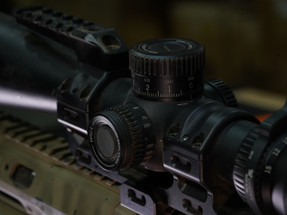
One of our current favorite examples of this concept is the Vortex Viper HD 3–15×44 with the VMR-3 MRAD reticle.
This optic checks a lot of important boxes for hunters:
-
Exposed locking elevation turret
-
Zero stop
-
Illuminated center dot for low-light situations
-
A clean and simple VMR-3 reticle with 0.5 mil graduations on the horizontal and vertical stadia
What this gives the shooter is a simple aiming solution that provides useful information without cluttering the sight picture. For hunting, that simplicity is incredibly valuable.
Why This Works Well for Hunting
The new Viper HD is lightweight and relatively compact for its class, and it punches well above its price point in terms of optical clarity and low-light performance.
Because it is second focal plane, you can use the optic comfortably at any magnification for most hunting situations. When you need to stretch things out a bit, simply turn the scope to 15x, and your subtensions will be correct for longer-range holds.
Most of the time while hunting, shots occur within a couple hundred yards. With most modern, high-performing cartridges, that typically means simply aiming high shoulder, perhaps holding slightly for wind, and sending it.
But modern hunters are increasingly pushing their effective ranges further. With the right gear and proper training, 400–600 yards is achievable for many shooters. And for those distances, 15x magnification is more than enough to get the job done.
Before taking the shot, simply dial to max magnification, confirm your hold, and send it.
It really is that simple.
Final Thoughts
With the enormous number of optics available today, choosing the right scope can feel overwhelming. But with a little planning and understanding of how optics work, navigating those choices becomes much easier.
If most of your shots occur at closer hunting distances, but you still want the ability to stretch things out when needed, don’t be afraid to consider a well-designed SFP optic.
A scope in the 3–15x class offers an excellent balance of usability, magnification, and clarity for real-world hunting scenarios.
Check Out Our Current Favorites
If you’re looking for a solid hunting optic built around this philosophy, take a look at one of our current favorite hunting optics listed under the tab marked:
“Optics Ready to Go.”